ORIGIN: Hindu (Epic and Puranic)
TYPE: Mother goddess
KNOWN PERIOD OF WORSHIP: Circa 400 CE until present
SYNONYMS: Sakti, Parvati
ART REFERENCES: Sculptures generally in bronze, but also in stone
LITERARY SOURCES: Ramayana and other texts.
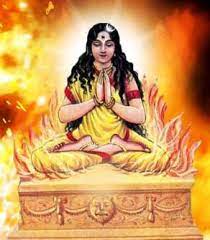
INFORMATION: Sati is the older incarnation of the benign aspect of the goddess Sakti. Alternatively she is percieved as an incarnation of Laksmi. According to legend her father was Daksa and her mother Prasuti. She bore sixteen daughters, the youngest of whom was Sati. She is perceived as an ideal Hindu wife and mother who, as a maiden, falls in love with the god Siva. At her choosing-of-a-husband ceremony she is distressed that her father has not invited Siva and throws her bridal wreath into the air, whereupon Siva appears in front of her. She becomes the consort of Siva, but the marital association is generally recognized when he is in his form known as Bhava, and epithet meaning "existence". Eventually she dies at Daksa's feet from the self-immolating heat of her own purity and zeal. She is reincarnated as Parvati.
The mythology is the basis of the practice of self-sacrifice that came to be known as sati or suttee. She is also connected with fire-walking rituals.